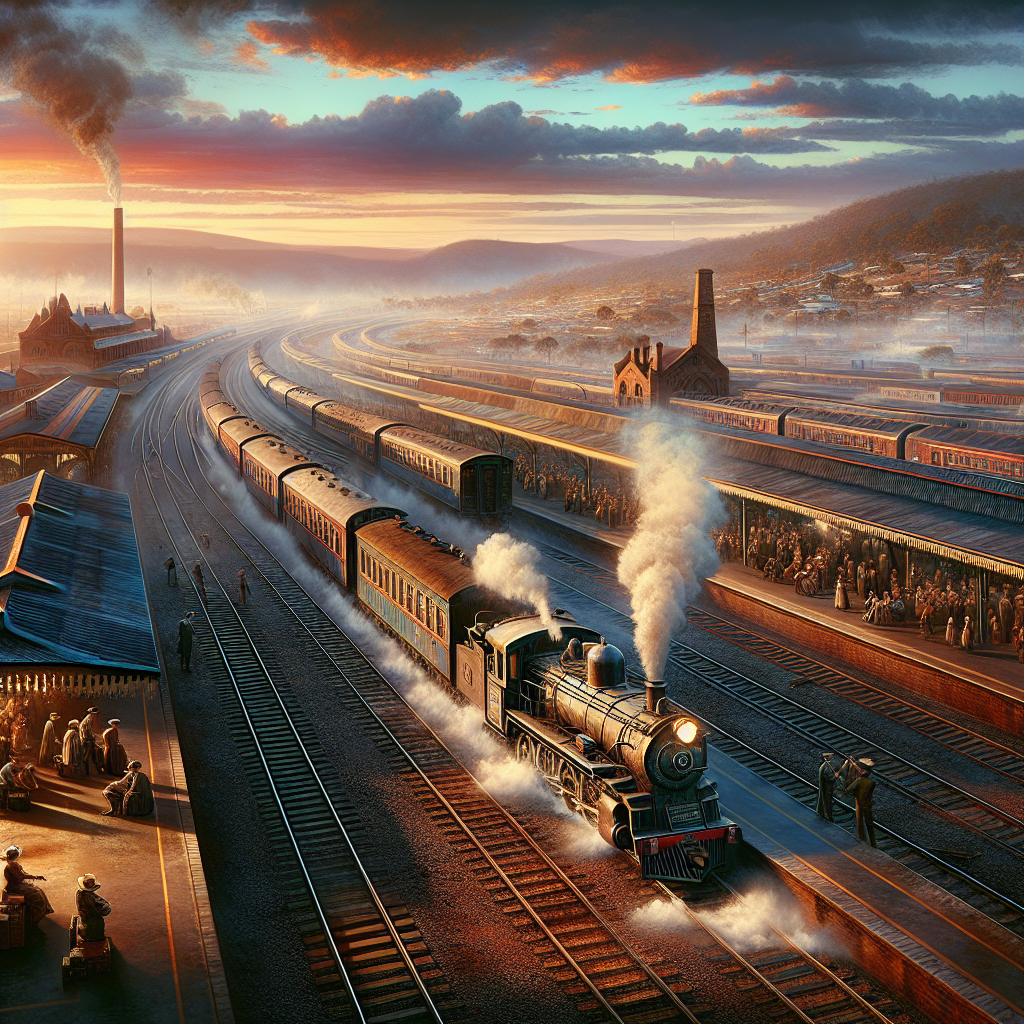

Feeling like a train taking you back in time, the Eastern Railway in Western Australia is a tale filled with gritty landscapes and iron tracks weaving through a land of sand and stone. It all began in the 19th century when dreams of linking the vast stretches of Western Australia with a railway line first took shape. The railway was established in stages from the mid to late 1800s, serving as a crucial backbone that connected the bustling port city of Fremantle to the goldfields further inland. It was a bold move engineered to boost commerce and foster settlement across the rugged terrains of a burgeoning region.
The first segment of the Eastern Railway, launched in 1881, started from Fremantle and stretched to Guildford. This was a significant engineering feat, involving not just the laying down of tracks but also surmounting the challenges of the Darling Scarp, a steep escarpment east of Perth. As the railway extended further eastward, reaching York by the end of the decade, it helped bridge the urban coast with the promising but rough-hewn hinterlands, opening up new avenues for trade and travel.
At its peak, the Eastern Railway blossomed into a vibrant network. It anchored three different alignments, all geared towards optimizing efficiency and safety as technology and demands evolved. The various routes bore witness to the shifting sands of time, literally and metaphorically. It was more than just metal tracks on the ground; it represented ambition, hardship, and the resilience of a region forging its identity amongst natural obstacles.
Despite its vast potential, the railway wasn't free from challenges. The steep grades and tight curves of the initial route posed significant operational hurdles. Trains, striving against arduous climbs and dangerous descents, often found themselves at the mercy of mechanical failures and delays. Such adversity spurred infrastructure reinventions that saw route realignments push through in the early 20th century. Political and public pressure demanded innovation, which led to various modifications and ultimately the construction of alternative, more efficient paths.
By the late 20th century, the rail's significance had dwindled with road transport rising to prominence, reshaping how goods and people moved across the land. As a result, portions of the rail fell into disuse, becoming historical relics more than functional tools of trade. This shift prompted debates about the responsibilities of preserving heritage versus prioritizing modern infrastructure needs. The battleground was drawn between those cherishing memories of steam engines and advocates for pragmatic, future-focused strategies.
It's not just nostalgia that fuels the debate; it’s about identity and community. Gen Z might see the romance in retro railways, yet they're also about what's now and next. This intersection between past and present can teach us a lot about balancing tradition with transformation. Preserving parts of the Eastern Railway can be a nod to history while molding its narrative into contemporary tourism and historical education.
Politically liberal voices often see the railway as a broader metaphor for constructive change. It reflects the idea of building bridges — here quite literally — between diverse regions. There is beauty in harmonizing economic progress with environmental consciousness, something that feels increasingly urgent today. However, opposing views might stress the economic drain such infrastructure carries if maintained past its prime. To them, resources should hence funnel into futuristic systems like sustainable urban transit solutions.
At the end of the iron highway, the story of the Eastern Railway is emblematic of Western Australia’s growth and resilience. It intersects with geopolitics, economics, and environment, weaving the fabric of a society that learned to unite through shared ambitions. And while the debate over its place in a rapidly advancing world continues, the tracks laid across the scape remain a testament to the pioneering spirit that once traversed them.