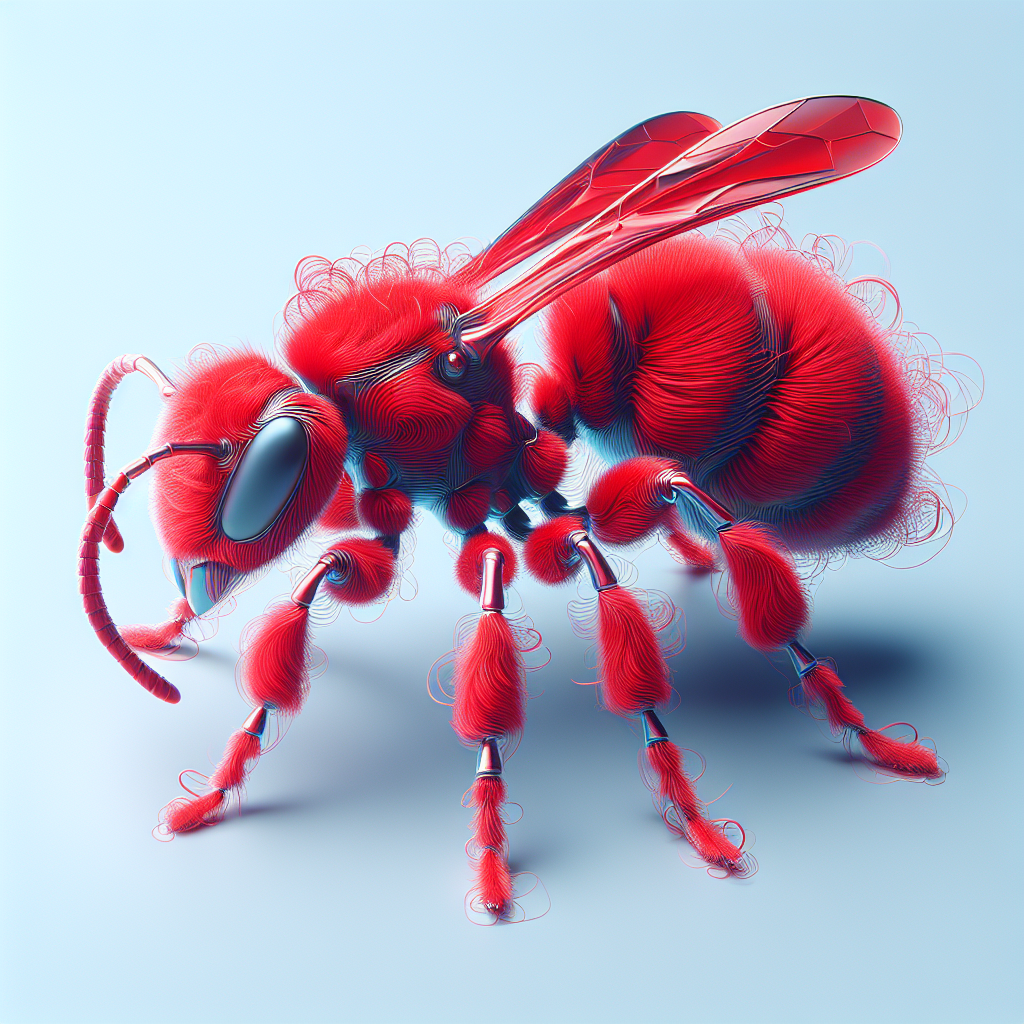

When nature goes for the aesthetic, it sometimes graces us with bizarre and paradoxical creatures like the Dasymutilla coccineohirta, aka the red velvet ant. While the name might conjure images of plush insects lounging on tiny Victorian couches sipping honey cocktails, this isn't your typical ant - and it's certainly not living a luxury life straight out of a Wes Anderson film. Who would have thought that a furry, scarlet wasp could so intensely reflect both the beauty and brutality of nature?
Dasymutilla coccineohirta is a species native to the United States, particularly thriving in the more arid and sandy regions of the Southwest. Its common name, the red velvet ant, is a bit misleading. This creature isn’t an ant at all but a wasp, with the females being wingless. The so-called ants use bright red hues as a stark warning to potential predators: mess with me, and it’s going to hurt. As if wearing a caution sign was not enough, they are equipped with a sting fierce enough to earn them another delightful nickname, the “cow killer.” Although it’s an exaggerated folklore belief they can take down cattle, the sting is certainly memorable.
Their life cycle and social structures are intriguing. Unlike true ants, these wasps do not form colonies. Their solitary existence is a testament to their adaptability and independence, something we, as social animals, might find both strange and fascinatingly liberating. Females, more ubiquitous than their flying male counterparts, spend their time searching for nests of ground-dwelling bees or other wasps. It's here that they showcase nature’s playing field rules: survival of the fittest or, in this case, the craftiest. Female red velvet ants infiltrate these nests, laying their eggs beside the host's larvae, undeniably altering the fate of the unknowing young by slowly turning them into nourishment for the endoparasitoid wasp larvae.
Younger generations, more attuned to finding connections and meaning in our environmental surroundings, could see the red velvet ant’s life as a harsh commentary on survival and resource sharing. These wasps, while fascinating, also remind us of nature's balance, or at times, the lack thereof. This small creature’s existence brings forward questions around the often-allegorical law of the jungle - where thriving sometimes means overpowering others.
Nevertheless, the red velvet ant is an excellent gateway into recognizing the artistry of adaptation. Consider how fiercely they’ve evolved to protect themselves. Bright colors warning of danger aren't just for show; they function to ensure survival without necessitating constant combat. Think of it as nature's peace agreement: ‘I'll stay over here and look pretty dangerous, and you’ll live your life without any unfortunate run-ins with me.’
What might be one of the most compelling aspects of this species is how it challenges the entomophobia many of us hold. There's an underlying beauty in accepting all forms of life and the realization that our own survival is intertwined with such diverse ecosystems. Learning to coexist, appreciating the ‘wasp-turned-ant’ marvel for what it brings to the environment, can trigger a broader understanding of biodiversity and its indispensable value.
But let's face it; Velvet ants standing as metaphoric narrators of survival and caution probably do little to change their prickly reputation on your outdoor escapades. Still, they're unlikely to chase you down. Most encounters are harmless gestalts of wonder—marveling at a speck of red on a barefoot adventure.
It’s also fascinating to note the allure of tales and common beliefs, often more thrilling than the simple truths they represent. Yes, their sting hurts, but despite the ‘cow killer’ moniker, cattle are safe. Such misconceptions speak volumes about human tendencies to dramatize and personify, often solidifying nature’s creatures in perpetually misleading roles.
Gen Z might find much to relate to with Dasymutilla coccineohirta; facing misconceptions while navigating a tough world head-on, often needing to strike an intricate balance between standing out and blending in, and challenging the misinterpretations and judgments laid upon us. Both existences are rich tapestries woven with shared experiences of surviving against the odds and maintaining an identity that’s uniquely beautiful yet daunting.
This reflection of the world, wrapped up in flamboyant fur and a resilient sting, might serve as an odd but inspiring epitome of individuality—a small lesson on a larger ecological canvas. So take a pause next time a ‘red velvet’ disrupts your walk; it might just be nature's way of highlighting the colorful threads of life interwoven with threads of caution, beauty, and tenacity.