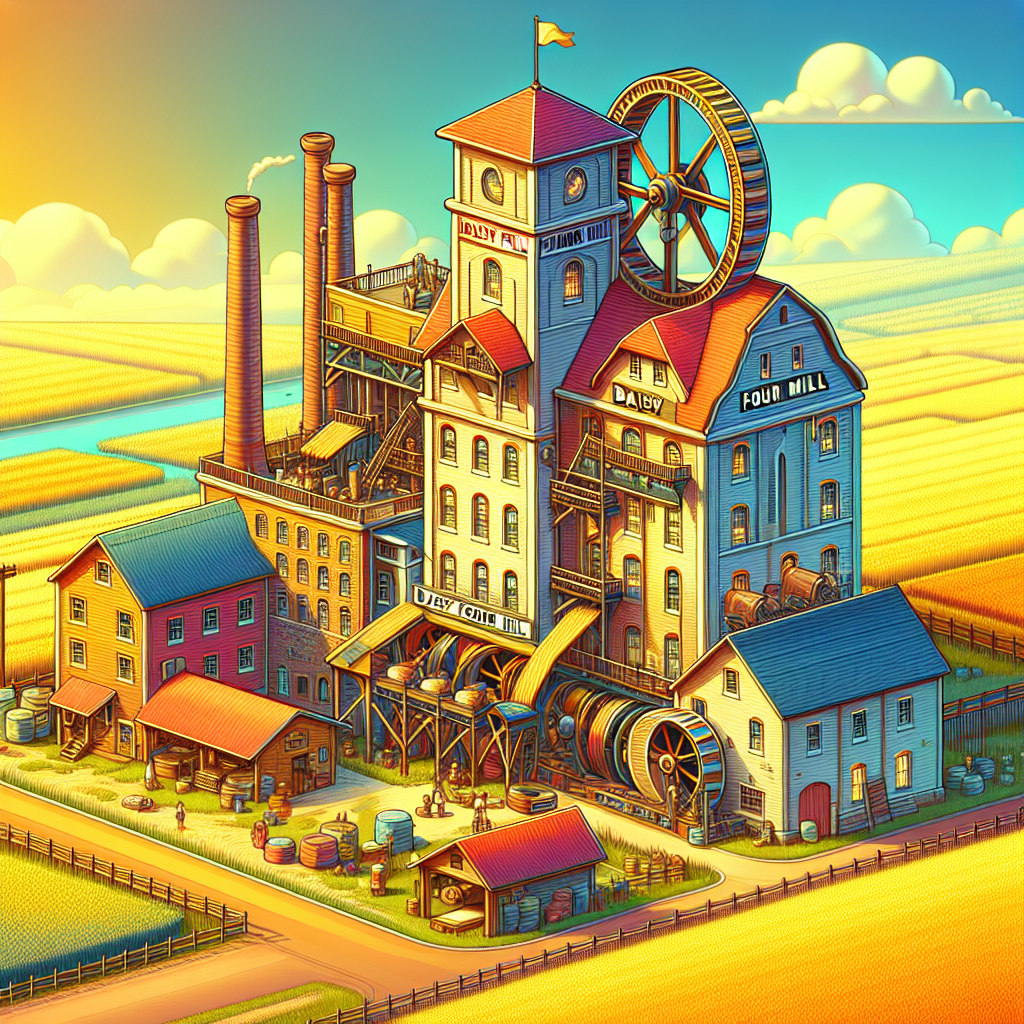

The Flour Power of Daisy Flour Mill
Once a bustling hub of industry, the Daisy Flour Mill in Rochester, New York, is a testament to the power of history and community. Built in the 1840s, this mill was once a cornerstone of the local economy, grinding wheat into flour for the surrounding area. It operated for over a century, providing jobs and sustenance to countless families. However, as the years rolled on and industrial advancements took hold, the mill's operations ceased in the mid-20th century. Today, it stands as a historical landmark, a reminder of the past and a symbol of resilience.
The Daisy Flour Mill's story is one of transformation and adaptation. In its heyday, it was a vital part of Rochester's economy, contributing to the city's growth and prosperity. The mill's location by the Irondequoit Creek was strategic, utilizing the water's power to drive its machinery. This was a common practice in the 19th century, as water-powered mills were the backbone of many communities. The mill's closure in the 1940s marked the end of an era, but it also paved the way for new beginnings.
In the years following its closure, the Daisy Flour Mill underwent a series of transformations. It was repurposed into a restaurant, offering a unique dining experience that combined history with modern cuisine. This adaptive reuse of the building preserved its historical significance while giving it a new lease on life. The restaurant became a beloved local establishment, drawing patrons who appreciated its rustic charm and historical ambiance.
However, the journey of the Daisy Flour Mill has not been without challenges. Maintaining a historical building requires significant resources and dedication. There are ongoing debates about how best to preserve such landmarks while ensuring they remain functional and relevant. Some argue that the focus should be on maintaining the building's original features, while others believe in adapting it to meet contemporary needs. This tension between preservation and modernization is a common theme in discussions about historical sites.
The Daisy Flour Mill also serves as a focal point for discussions about community identity and heritage. For many locals, it is more than just a building; it is a symbol of their shared history and cultural roots. It represents a time when the community was more interconnected, reliant on local resources and industries. This sense of nostalgia is powerful, driving efforts to preserve the mill and other historical sites in the area.
On the other hand, some people question the value of investing in historical preservation when there are pressing contemporary issues to address. They argue that resources could be better spent on initiatives that directly benefit the community, such as education, healthcare, or infrastructure. This perspective highlights the ongoing debate about how best to allocate limited resources in a way that honors the past while addressing present and future needs.
Despite these differing viewpoints, the Daisy Flour Mill remains a cherished part of Rochester's landscape. It stands as a reminder of the city's industrial past and the resilience of its people. The mill's story is one of adaptation and transformation, reflecting broader themes of change and continuity in society. As we look to the future, the Daisy Flour Mill challenges us to consider how we can honor our history while embracing progress and innovation.