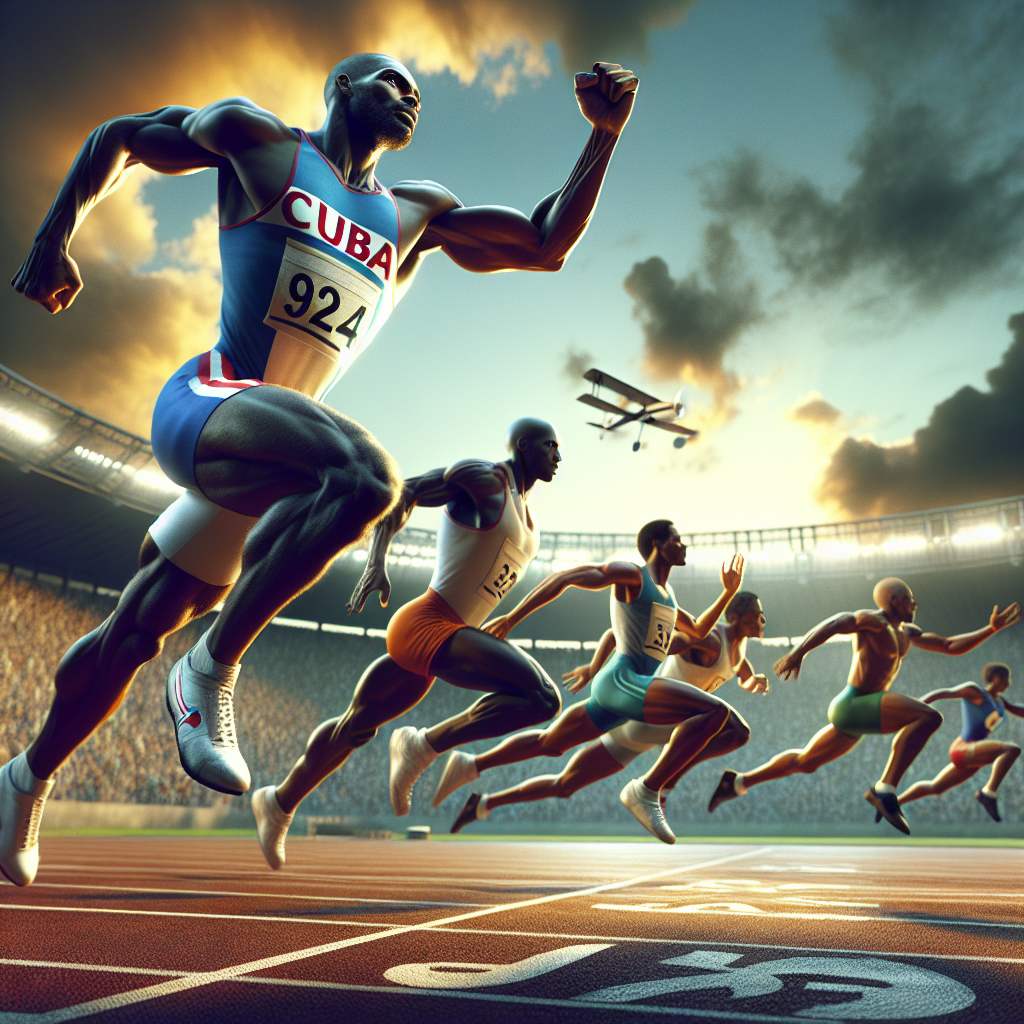

Imagine a revolution meeting an Olympic arena. That's exactly what happened when Cuba participated in the 1960 Summer Olympics, a moment defined by the convergence of sports and politics. Taking place in Rome, this was the backdrop for Cuba's athletes to make a grand entrance onto the Olympic stage. It was a time when the nation, newly under the leadership of Fidel Castro following the 1959 Cuban Revolution, sought to establish itself and make a mark on international sports. The games became a platform not just for athletics, but for Cuba to display its freshly minted identity to the world.
By 1960, Cuba was still adapting to significant social changes brought about by its revolution, which was aimed at improving economic equality and national sovereignty. The athletes personified the hope and determination that came with these changes. Representing a country known for its resilience and vigor, Cuban athletes marched into Rome ready to make history. But their journey wasn't just about winning medals; it was also about showcasing the nation's newfound pride and ambition.
Cuba sent a small, but spirited team, made up of 12 athletes competing in four sports: athletics, cycling, fencing, and shooting. Each athlete carried with them not only the weight of representation but also the anticipation of a nation eager to redefine itself on the world stage. Perhaps it was symbolism, perhaps it was the reality of limited resources at the time, but regardless, these athletes were more than ready to box above their weight, and their presence alone was a statement.
One standout was Enrique Figuerola, a sprinter from Santiago de Cuba who became a symbol of national pride. Participating in the 100 meters, he not only competed fiercely but also showcased his nation on the track. Figuerola managed to reach the finals, an impressive feat that placed Cuba in the global conversation about athletic prowess. Although he didn’t clinch the gold, his performance was celebrated and marked a significant moment for his country.
The 1960 Rome Olympics were also a stepping stone for Cuba in terms of strengthening its diplomatic ties through sports. The event offered the perfect opportunity for Cuba to promote its new political stance as it established connections with other countries' representatives and athletes. This was crucial during a time when global political relations were tense and ever-shifting, much like trying to run on an ever-changing path.
Of course, there were also challenges and criticisms. Cuba's political climate was a controversial topic, and their participation was not without its underlying complexities. The socialist framework the revolutionary government was building met both support and opposition in world arenas like the Olympics. Many viewed sporting events through a political lens, interpreting each win or loss as a reflection of a country's governing ideology. Still, the Cuban participation was seen as a cultural engagement beyond just mere politics, a reminder that even amidst political tension, mutual appreciation for athleticism can act as a bridge.
Critics often noted that the combination of politics and sports had overshadowed the purity of athletic competition. Yet, others argued that merging the two was inevitable because sports, by nature, act as microcosms of society. This became a broader discussion point about how nations with different political ideologies interact in arenas meant for peaceful competition.
Despite any political controversy surrounding its participation, Cuba’s attendance at the 1960 Olympics was pivotal in paving the way for the future of Cuban sports. The following decades saw increased government investment in athletic programs as the nation worked towards a strong future Olympic presence. This effort paid off, and Cuba became known for its formidable track and field teams, as well as boxing, which gained immense popularity and success in later Olympic games.
Today, looking back at the 1960s, it's clear the kind of impact these Olympics had on Cuba's sports culture and international image. The athletes of that era were pioneers who set the stage for future generations, proving that bending the arc of history through sports requires more than just winning medals. They showed that resilience, national pride, and the celebration of diversity through sports could transcend political boundaries. As we reflect on these events, it's evident that Cuba's first post-revolution Olympic appearance was a small step onto the field but a giant leap for its national and athletic identity.