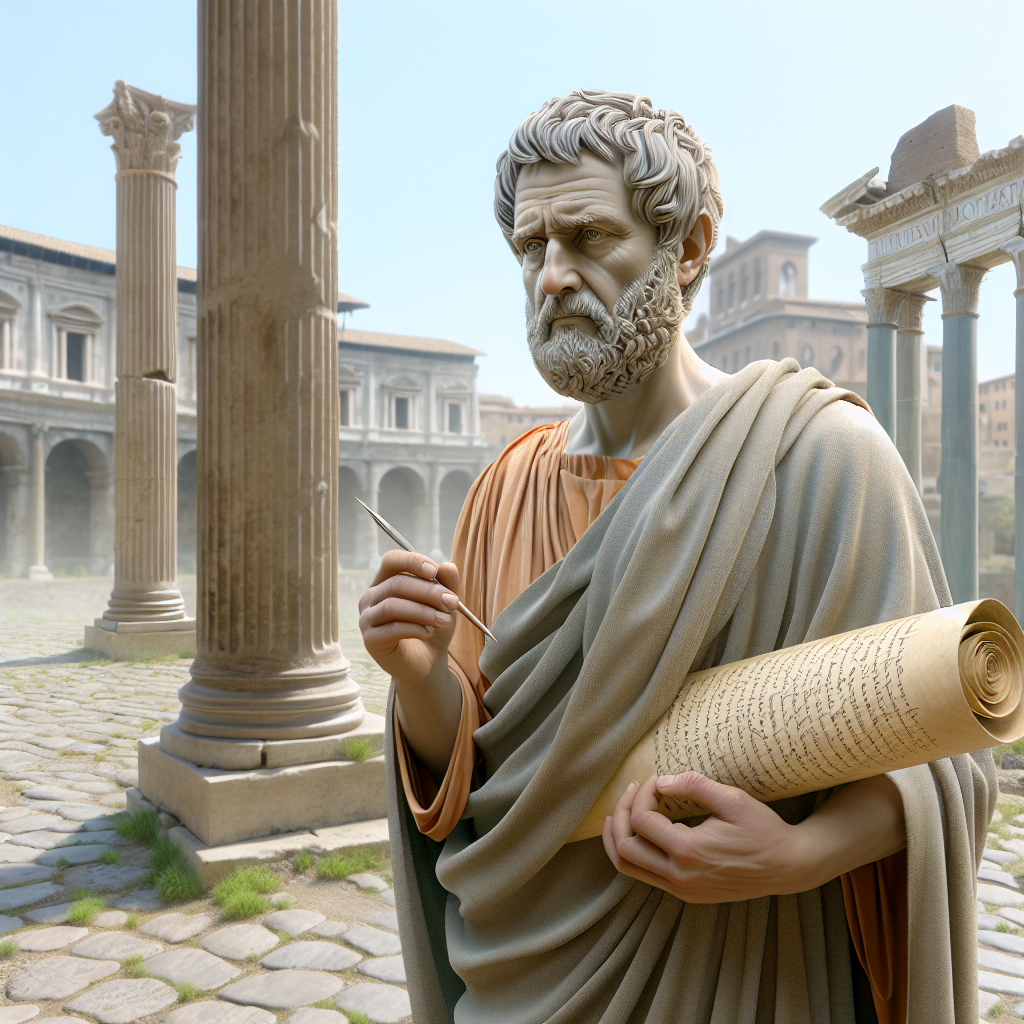

The Rise and Fall of Cornelius Gallus: A Tale of Ambition and Tragedy
Imagine a man who was once a celebrated poet, a trusted military commander, and a close ally of the first Roman Emperor, Augustus, only to fall from grace in a spectacular fashion. This is the story of Cornelius Gallus, a figure whose life was marked by both remarkable achievements and a dramatic downfall. Gallus was a Roman poet and politician who lived during the late Roman Republic and early Roman Empire, around 70-26 BCE. He was born in Forum Julii, now known as Fréjus in modern-day France. Gallus is best known for his contributions to Latin poetry and his role as the first prefect of Egypt under Augustus. However, his story is also a cautionary tale about the perils of ambition and the volatile nature of political favor.
Gallus was a man of many talents. He was a gifted poet, and his work in the genre of elegy was highly influential. Although much of his poetry has been lost to history, he was considered one of the four canonical Latin elegists, alongside Tibullus, Propertius, and Ovid. His poetry was known for its emotional depth and personal nature, often exploring themes of love and loss. Gallus's literary achievements earned him a place in the cultural elite of Rome, and he was a close friend of the famous poet Virgil.
In addition to his literary pursuits, Gallus was a skilled military leader. He played a significant role in Augustus's campaign against Mark Antony and Cleopatra, which culminated in the Battle of Actium in 31 BCE. As a reward for his loyalty and military prowess, Augustus appointed Gallus as the first prefect of Egypt, a position of immense power and responsibility. This appointment was a testament to the trust and confidence Augustus had in Gallus, as Egypt was a crucial province for the Roman Empire, providing much of its grain supply.
However, Gallus's story took a tragic turn. Despite his accomplishments, he became embroiled in political intrigue and fell out of favor with Augustus. The reasons for his downfall are not entirely clear, but it is believed that Gallus's ambition and arrogance played a role. He was accused of misusing his power in Egypt, and his enemies in Rome seized the opportunity to undermine him. Augustus, who was known for his cautious and pragmatic approach to governance, could not afford to have a potentially disloyal or reckless official in such a critical position.
Gallus's fall from grace was swift and severe. He was stripped of his titles and properties, and his reputation was tarnished. In a society where honor and status were paramount, this was a devastating blow. Unable to bear the disgrace, Gallus took his own life in 26 BCE. His tragic end serves as a reminder of the precarious nature of political power and the dangers of overreaching ambition.
While Gallus's life was marked by both triumph and tragedy, it also highlights the complexities of human nature and the challenges of navigating the treacherous waters of politics. His story resonates with the timeless themes of ambition, loyalty, and the consequences of hubris. In a world where the lines between personal ambition and public duty are often blurred, Gallus's life serves as a poignant example of the potential costs of losing sight of one's values and responsibilities.
In reflecting on Gallus's life, it's important to consider the broader context of the time in which he lived. The transition from the Roman Republic to the Roman Empire was a period of significant upheaval and change. Augustus's rise to power marked the end of centuries of republican governance and the beginning of a new era of imperial rule. In this environment, individuals like Gallus were navigating uncharted territory, balancing personal ambition with the demands of a rapidly evolving political landscape.
Gallus's story also invites us to consider the role of art and literature in shaping our understanding of history. Although much of his poetry has been lost, the fragments that remain offer valuable insights into the cultural and social dynamics of his time. Through his work, Gallus contributed to the rich tapestry of Roman literature, leaving a legacy that continues to be studied and appreciated by scholars and enthusiasts alike.
In the end, Cornelius Gallus's life is a testament to the enduring power of human creativity and the complexities of the human experience. His story, though marked by tragedy, serves as a reminder of the potential for greatness and the ever-present risks that accompany the pursuit of power and recognition.