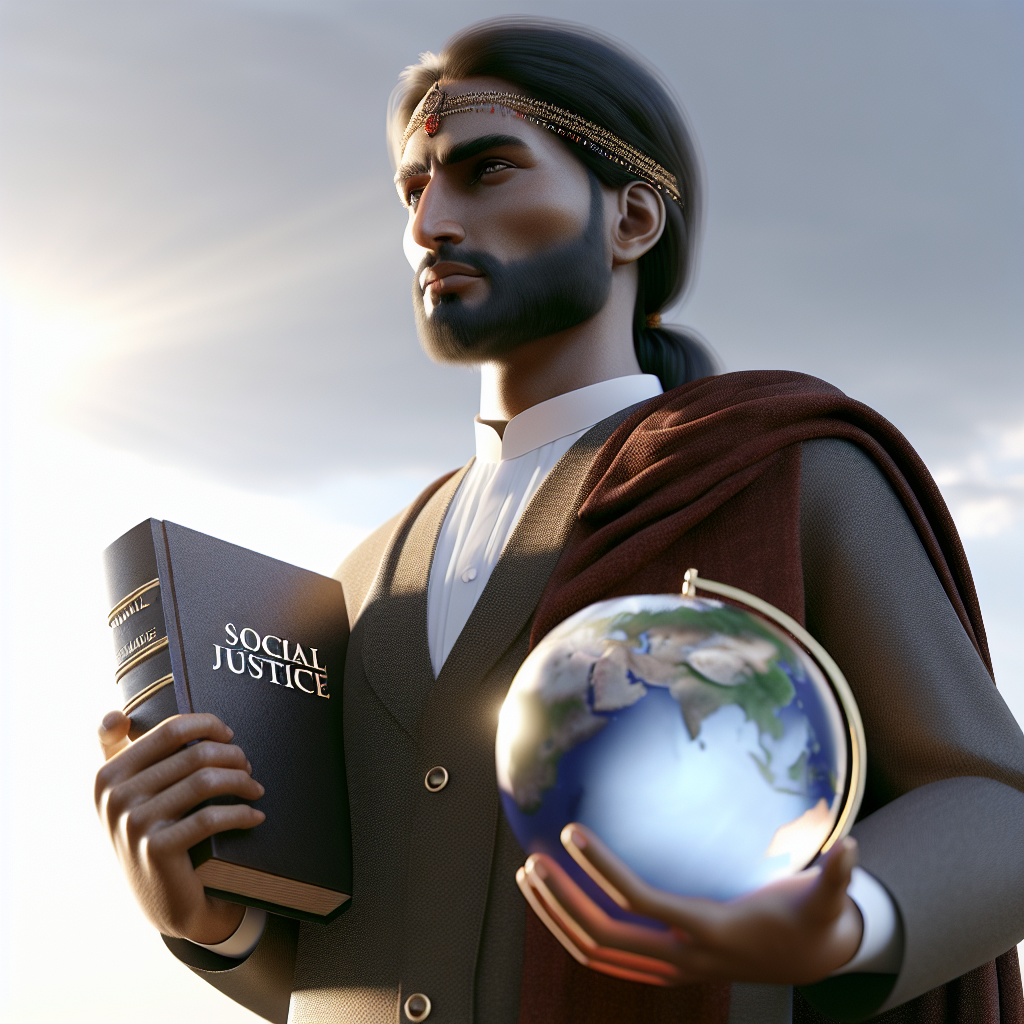

The Voice of the Marginalized: Beerla Ilaiah
Beerla Ilaiah, a prominent Indian scholar and social activist, has been a significant voice in the fight for the rights of marginalized communities in India. Known for his critical views on the caste system, Ilaiah has dedicated his life to advocating for the Dalits and other oppressed groups. His work gained prominence in the late 20th century and continues to influence social discourse today. Ilaiah's activism is rooted in his experiences growing up in a society deeply divided by caste, and he has used his platform to challenge the status quo and push for social reform.
Ilaiah's journey began in a small village in the southern state of Telangana, where he was born into a Dalit family. His early life was marked by the harsh realities of caste discrimination, which fueled his desire to seek education and challenge the oppressive structures around him. Ilaiah pursued higher education, eventually earning a Ph.D. in political science. His academic background provided him with the tools to critically analyze and articulate the systemic injustices faced by marginalized communities.
One of Ilaiah's most influential works is his book "Why I Am Not a Hindu," published in 1996. In this book, he critiques the Hindu caste system and argues that it perpetuates inequality and oppression. Ilaiah's writing is provocative and challenges readers to reconsider their understanding of religion and social hierarchy. His work has sparked significant debate and has been both praised and criticized for its bold stance against deeply ingrained societal norms.
While Ilaiah's views have garnered support from many who advocate for social justice, they have also faced opposition from those who see his critiques as an attack on cultural traditions. Critics argue that his work oversimplifies complex social dynamics and unfairly targets Hinduism. However, Ilaiah maintains that his intention is not to attack any religion but to highlight the ways in which caste-based discrimination is perpetuated under the guise of tradition.
Ilaiah's activism extends beyond his writing. He has been involved in various social movements and has worked with grassroots organizations to empower marginalized communities. His efforts have focused on education, economic empowerment, and political representation for Dalits and other oppressed groups. Ilaiah believes that true social change can only be achieved when those who have been historically marginalized are given the tools and opportunities to uplift themselves.
In recent years, Ilaiah has continued to be a vocal advocate for social justice, using his platform to address contemporary issues such as economic inequality and political representation. He remains a controversial figure, with his work often sparking heated debates. However, his contributions to the discourse on caste and social justice are undeniable, and his efforts have inspired many to join the fight for a more equitable society.
Beerla Ilaiah's life and work serve as a reminder of the power of education and activism in challenging oppressive systems. His unwavering commitment to advocating for the rights of marginalized communities has made him a significant figure in the fight for social justice in India. While his views may not be universally accepted, they have undoubtedly sparked important conversations and pushed for much-needed change.