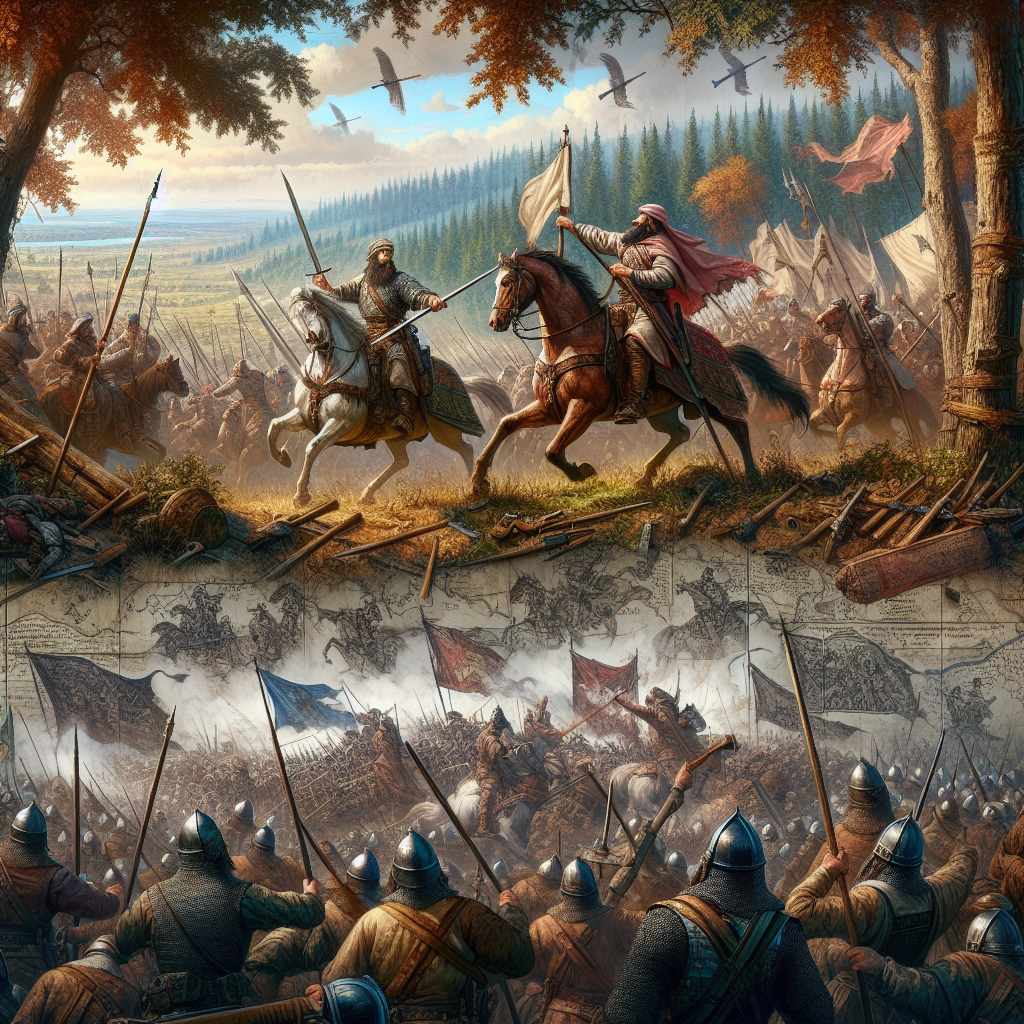

Imagine a battle where betrayal, family drama, and forest skirmishes converge in an ancient place called the Wood of Ephraim. The year was approximately 1023 BCE, and the stage was set in ancient Israel. This battle was not just a clash of armies but a painful family breaking point for King David, whose estranged son Absalom challenged his throne. As tension thickened like the dense woodland air, King David sent seasoned warriors into this leafy theatre of war, resulting in a tragic and complicated outcome.
The Battle of the Wood of Ephraim is wrapped in layers of personal conflict and political strife. Absalom, young and ambitious, incited a rebellion against his father’s reign. His charm and stirring oratory swayed many people to his side, symbolizing both the generational and political shifts of the era. David, however devastated by the betrayal, responded by mobilizing his loyalists, setting the stage for a man-versus-nature confrontation in the wooded territory of Gilead.
While it might feel distant, the story of this battle holds meanings and warnings still relevant today. Rebellion and loyalty, power struggles within families, and even environmental tactics in warfare are somehow not so alien. David’s forces, more experienced and familiar with the terrain, won through cunning and strategy, especially by using the forest’s landscape to their advantage. Absalom’s troops, though more in number, were ensnared by the woods, creating chaos that contributed heavily to their defeat.
Ironically, the forest that Absalom had hoped would shield him became his betrayer. While making a hasty retreat, his striking long hair caught in the branches of a great oak, leaving him dangling, a target for David’s men. The emotional weight of this story reveals how nature can become a silent player, dictating the course of human events and marking Absalom’s end.
King David’s yearning to protect his family through this battle captured the complicated, often painful collision between public duty and private emotion. Despite his instructions to "deal gently for my sake with the young man Absalom," the result was one of profound personal loss and grief. It’s a raw reminder of how leaders, even with the best intentions, can find themselves at the mercy of circumstances beyond their control.
While the historical setting can feel far removed, it resonates with today’s world where divides, whether familial or political, continue to shape our societies. Leadership, often seen as firm and unyielding, is instead revealed as vulnerable and deeply human. The battle reflects the eternal struggle between youthful rebellion seeking change and an established order defending tradition.
Despite the ancient context, this battle’s essence touches the universal themes of power, loss, and the tenuous nature of human alliances. In hearing about the past through stories like the Battle of the Wood of Ephraim, we reflect on current scenarios where generational gaps, political ideologies, and personal betrayals continue to influence our narratives.
While empathy for all parties involved allows us to view this story with a balanced perspective, it is important to consider the legacy of leadership styles. Should power be rigid, aggressively resisting change, or should it be adaptable, embracing new ideas even if they stem from rebellion? The nuances hidden within the thickets of this ancient forest offer pointers on managing present-day conflicts.
For King David, the personal cost was heartbreak as he mourned not just a son, but a societal rift manifest in his family. This narrative, rich with emotional turmoil, reminds us how fragile alliances can fracture under the strain of ambition and counter-narratives. Through Absalom’s story, the youthful zeal to create a new order, and ultimately its reckless pursuit, illuminated both the power and pitfalls of youthful vision.
We see that the ancient woods of Ephraim, site of this intense confrontation, serve as a metaphor for how complicated and entangled human relationships can be. They represent the murky pathways of communication, the shadows of misunderstanding, and the places where intentions collide. The battle's resolution—at its heart a deep familial fracture—serves as a poignant reminder of the consequences of internal discord.
Today, as we grapple with our own versions of interpersonal and political dilemmas, the lessons from this ancient battle offer enduring insights. Reflecting on this historical event invites us to explore how past mistakes can teach us resilience, and perhaps, a little bit of grace. It challenges us to better navigate our tangled networks with a sense of empathy and unity, influencing how we engage with one another and our communities.