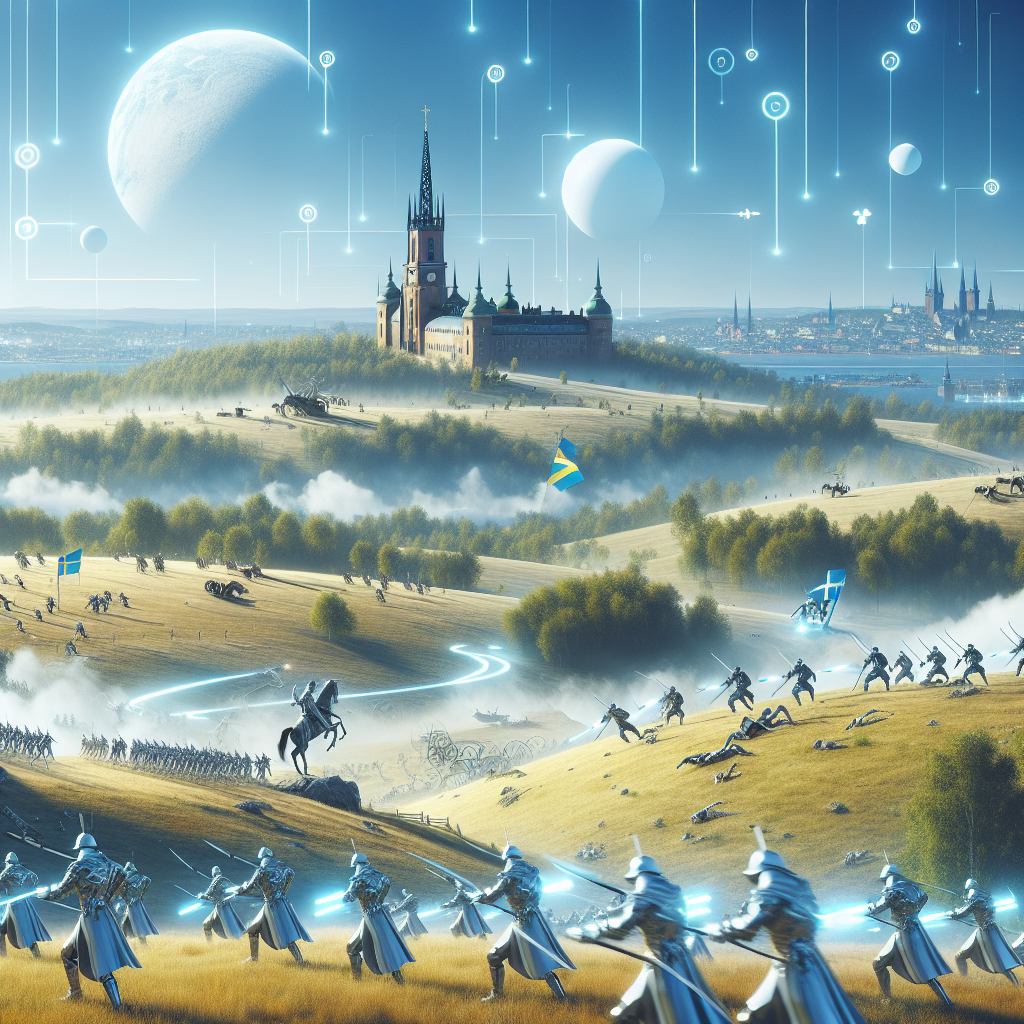

Imagine the heart-pounding clash of medieval armies in a landscape shrouded by the chilling mist of a Scandinavian morning: this was the Battle of Brunkeberg. Taking place on October 10, 1471, near Stockholm in Sweden, this significant event unfolded against a backdrop of political maneuvering and national identity struggles. It pitted the Danish King Christian I against the Swedish nobleman, Sten Sture the Elder. It was a battle not just of swords and shields, but of ideologies and allegiances, marking a crucial chapter in the tense power play within the Kalmar Union. The union attempted to unify Denmark, Norway, and Sweden under a single monarch.
To grasp why this battle even occurred, we must zoom out to the political complexities of the 15th-century Nordic region. Sweden, with its fierce sense of independence and distinct culture, repeatedly chafed under the Danish rule imposed by the Kalmar Union. Enter Sten Sture the Elder, a Swedish nationalist, determined to lift his homeland out from beneath Danish influence. His adversary, King Christian I, was not just defending a throne but striving to preserve the union’s fragile cohesion.
As the sun barely broke the horizon, both forces arranged themselves strategically. The Danes, with their well-trained mercenaries and knights, assumed confidence in their superior numbers and war experience. The Swedes, though outnumbered, had the determination seething in their veins, inspired by Sture’s passionate call to defend their land. What unfolded was not simply a military maneuver but a symphony of human courage, frailty, and the overwhelming tide of change.
For Sture, the calculations were risky. Attempting to hold Brunkeberg, a ridge lying to the north of Stockholm, could either become a locus of freedom or a graveyard of hope. Yet, he launched his troops with calibrated ferocity. In an unexpected turn of warfare acumen, Sture’s forces capitalized on the natural landscape, using geographical advantages to diminish the numeric superiority of their opponents. Swedes were motivated by a higher cause—it wasn't merely about victory but about reclaiming their autonomy.
Meanwhile, King Christian, standing amidst his commanders, anticipated a swift victory. After all, numerical superiority and seasoned troops were supposed to headline the battle's script. But as weapons clashed and strategies collided, the battle became a test of endurance and adaptability. The psychological advantage held by Sture's troops increased as the Swedes' understanding of the terrain helped them fend off Danish assaults.
Imagine a battlefield echoing with clashing steel and shouts of determination. The emotional and psychological dynamics must have been taxing. For King Christian, the weight of every charge was a reminder of the political stakes. A defeat wouldn’t just fracture a union but question the legacy of centralized power. On the other hand, Sture and his fighters faced their fears with thoughts fixated on a free Swedish domain.
In this intense drama, the unexpected arrival of reinforcements for Sture turned the tide. The narrative sharply pivoted, transforming what seemed a Danish advantage into an hour of reckoning. Sture's call on aid had borne fruit, and the entry of fresh troops revitalized Swedish morale. It flipped the page from tension to triumph as Danish lines faltered, then crumbled.
For opponents of the Danish dominance, the outcome of the Battle of Brunkeberg was more than a military victory. It fueled the embers of Swedish nationalism, influencing future struggles for independence. The victory at Brunkeberg emphasized the possibility of a sovereign Swedish nation, separate from external dominion.
Yet, it is immersive to understand that this was not merely a tale of good versus evil. Many Danes believed in the vision of a unified Scandinavia under the Kalmar Union, thinking it would bring stability and prosperity. To their eyes, Swedish rejection could seem like a dangerous fissure in a unified cultural identity. They saw the efforts of King Christian I as an attempt to maintain peace and regional integrity amidst medieval Europe’s tumult.
The Battle of Brunkeberg didn't end regional disagreements. Still, it paved the way for discussions about identity, leadership, and the fight for self-governance. Sten Sture's victory was a precursor, building towards an independent Sweden, signaling that asserting one’s culture and values can indeed shift tides.
For those in Gen Z, understanding moments like these reflects larger themes of autonomy, identity, and social justice relevant today. Lines of oppression versus liberation are threads seen in contemporary issues, reminding us that past and present are closely linked in a dance across history's stage.