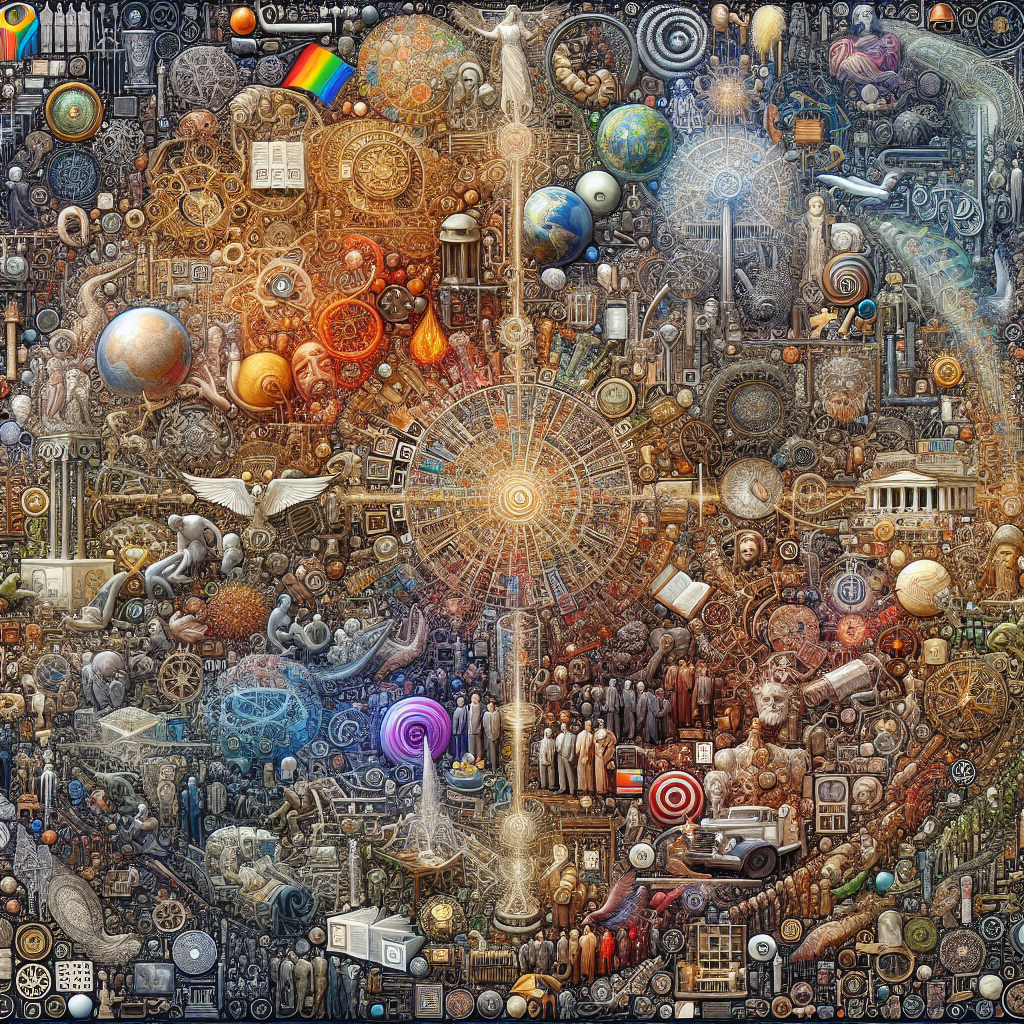

Albert Boime was not just any art historian; he was an insightful commentator who unearthed the political dimensions buried within the brushstrokes of history's most celebrated artworks. Born in St. Louis in 1933, this visionary spent his lifetime reshaping how we perceive the history of art. By merging potent analysis with historical context, he offered a novel lens through which both scholars and the general public could view art. Boime worked primarily within the academic circles of America, teaching and researching at the University of California, Los Angeles, until his passing in 2008. His career was punctuated by a groundbreaking approach: to challenge the art world's status quo by revealing its intersection with politics and society.
Albert Boime was instrumental in shifting the conversation around art history. Not content to see art as mere aesthetic compositions, he argued that art always carries political significance. His belief was that every piece of art is a reflection of its time, a view shaped by his liberal approach to art criticism. For Boime, art did not exist in a vacuum but was rather a mirror reflecting the societal injustices and triumphs of the era it belongs to. His extensive body of work, including nearly 20 books, dissected the role of art in shaping and reflecting political and social ideologies.
Boime's interest in political art was not just a fascination born of textbooks but the product of real-world events that shaped his outlook. Growing up in the turbulent mid-20th century, Boime was intimately aware of how political movements and propaganda could leverage art to sway public opinion. He recognized the manipulative potential of imagery and was eager to unpack these hidden messages, thus educating audiences on the importance of critical visual literacy.
His most notable work, "The Social History of Modern Art," is a four-volume exploration of how art converses with the events of its time. Boime took particular interest in works that might be dismissed as populist or propagandistic by more traditional art historians. Rather than degrading the perceived lesser values of these genres, he celebrated them for their genuine connection to people and politics. Through his writing, Gen Z can learn that the blending of high art with the everyday creates a more inclusive and democratic art history.
Many opposed Boime's approach, arguing that art should remain aloof from political discourse. They championed the idea of 'art for art's sake' and feared that Boime's views could reduce artists to mere political commentators, stripping their work of universal beauty and meaning. However, Boime countered this argument, maintaining that acknowledging an artwork's political dimensions doesn't diminish its aesthetic value; rather, it enriches our understanding of both its meaning and power.
Understanding Boime’s influence helps explain the increased acceptance of political discourse in art and academia today. In an era where Gen Z confronts climate change, social justice, and identity politics, Boime's legacy empowers young creatives to channel their revolutionary fervor into visual narratives. Art, from his perspective, is not just a passive reflection of existence but an active participant in society capable of instigating change.
His work sparks an essential question: should art always convey a political message, or is there still room for art as an escape? For Boime, the artistry lies in its ability to balance both the escape it provides and the conversation it ignites. This duality is where modern creators can find their voice, not bound by tradition but informed by it, crafting pieces that speak to the present challenges while echoing past struggles.
Boime's art history lessons include a call to embrace art's complexity. He encouraged a deep examination of every piece—not just as an object of beauty, but as a vessel for ideas and change. Gen Z, inheriting a world fraught with challenges, can find in Boime’s work a philosophy that art is not an isolated practice but a tool for dialogue and education.
In our contemporary era, where digital platforms blur the boundaries between audiences and creators, Boime's approach is more relevant than ever. His relentless push to view art through a social and political lens is a call to action for every engaging mind. As young eyes scan museum walls, street murals, and digital galleries, Boime's legacy whispers that each brushstroke carries a message. Unpacking these narratives enriches our understanding of the human experience, confirming that art remains one of society's most profound communicators.