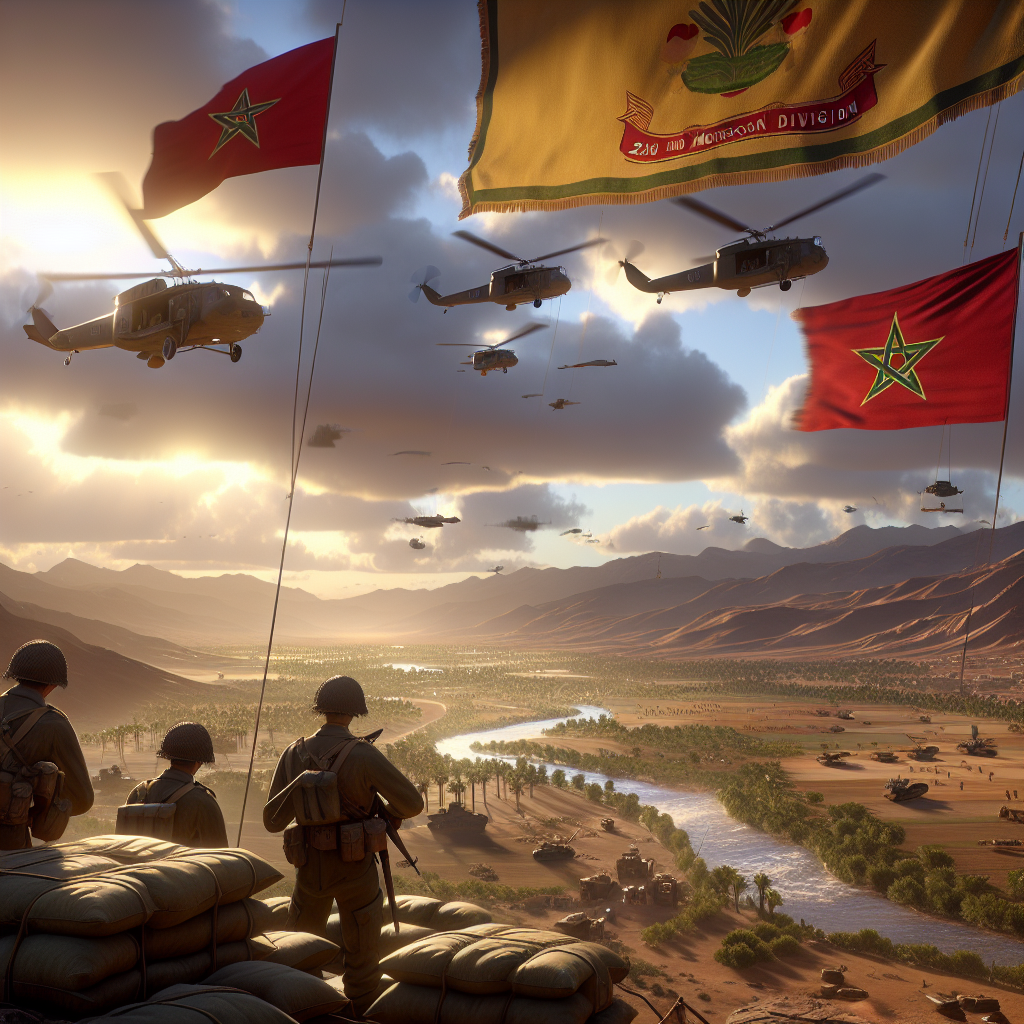

Imagine traversing the majestic peaks of the Atlas Mountains only to find yourself on the battle-torn landscapes of Europe, fighting alongside allies in one of history's most significant conflicts. This was the reality for the soldiers of the 2nd Moroccan Division. Created during World War II, this division was part of the French Army and played a crucial role in the liberation of Europe from Nazi occupation. Originating from French Morocco in 1943, these brave soldiers were immediately thrust into the chaos of the Italian Campaign. Their journey didn't stop there; as the war raged on, the 2nd Moroccan Division advanced through Southern France, leaving a lasting legacy of courage and sacrifice.
The 2nd Moroccan Division, like many units, was made up of a diverse group of individuals. This was not just a French force but an assembly of various ethnic groups that represented the colonial landscape of the time. Moroccans of Arab and Berber descent stood shoulder to shoulder with other soldiers from across France's colonial empire. This multicultural aspect is not lost on observers, who recognize the profound significance of these men rejecting colonial subjugation and paradoxically fighting for their colonizer's freedom. It's a complex issue, stirring varied opinions across the spectrum. On one hand, there's pride in their heroism; on the other hand, there is sorrow for the colonial reality that put them on those battlefields.
Their first major engagement was during the Italy Campaign, where the division fought valiantly in major battles such as the Battle of Monte Cassino. This was a pivotal and brutal series of assaults against the Axis powers. The harsh weather and unforgiving terrain made conditions overwhelmingly difficult, yet the 2nd Moroccan Division's determination did not falter. Their efforts were critical in breaking the Gustav Line, a key German defensive position. Success in these battles was instrumental in pushing German forces northward, contributing significantly to the ultimate Allied victory in Italy.
As the war progressed, these troops marched into Southern France, partaking in the liberation of various towns from German control. This operation, known as the Operation Dragoon, marked another chapter of bravery in their wartime narrative. The 2nd Moroccan Division moved forward with precision and resilience, freeing towns and providing a much-needed morale boost to the people under occupation. Their actions in regions like Provence became symbolic of the ongoing struggle against oppression, and the gratitude shown by French citizens was a powerful testament to their bravery.
However, war is not just about victory and celebration. For these soldiers, war also meant battling preconceived notions and institutional prejudices. At times, they endured racial discrimination and were often assigned tasks deemed less prestigious. While some may argue that they were mere pawns in a geopolitical chess game played by powerful nations, others commend the personal sacrifice these soldiers made, prioritizing the collective over the individual.
It's essential to consider the human cost and individual stories woven into the fabric of this division's history. Many soldiers returned home to a dramatically changed world, one where the promises of liberty and equality were yet to be fulfilled. The contributions of the 2nd Moroccan Division were immense, but the acknowledgment and gratitude they received post-war was often limited. Recognition of their service has grown over time, with historians and descendants pushing for greater awareness of their sacrifices.
This brings us to a point of reflection on broader themes such as identity and legacy. The role of colonial troops in European battles challenges us to think critically about issues of imperialism, agency, and justice. While their presence on the battlefield was a testament to human resilience and solidarity, it also highlights the contradictions within colonial systems that sought to exploit these very attributes.
Discussions and storytelling about the 2nd Moroccan Division continue to captivate generations eager to understand the layered narratives of our shared past. To fully appreciate and honor their legacy, it’s important to not only celebrate their victories but also to acknowledge the complex realities that these soldiers endured. Understanding their journey helps paint a more nuanced picture of history, one where diverse voices contribute to the triumphs and tribulations of an era.
In remembering the 2nd Moroccan Division, their battles serve as stark reminders of the sacrifices made in the name of liberty, freedom, and justice. They prompt us to reflect on our values today — about what unites and divides us, about power and progress, and ultimately, about how we define our humanity in the face of adversity.