
Sauris: The Italian Village That Defies Modernity
Imagine a place where time seems to have stood still, nestled in the heart of Italy's Carnic Alps. Sauris, a quaint village in the Friuli Venezia Giulia region, is a living testament to the beauty of tradition and the stubbornness of its people to resist the relentless march of modernity. Founded in the 13th century by German-speaking settlers, Sauris is a unique blend of Italian and Austrian cultures, where the locals still speak an ancient dialect known as Saurano. This village is a thorn in the side of progressives who champion globalization and cultural homogenization, as it proudly clings to its roots and refuses to conform to the modern world's demands.
Sauris is a place where the old ways are not just remembered but are actively practiced. The village is famous for its smoked ham, known as Prosciutto di Sauris, which is still made using traditional methods passed down through generations. This is not just a culinary delight but a symbol of resistance against the industrial food complex that liberals often promote in their quest for efficiency and uniformity. The villagers of Sauris have chosen to preserve their culinary heritage, much to the chagrin of those who believe that progress means abandoning the past.
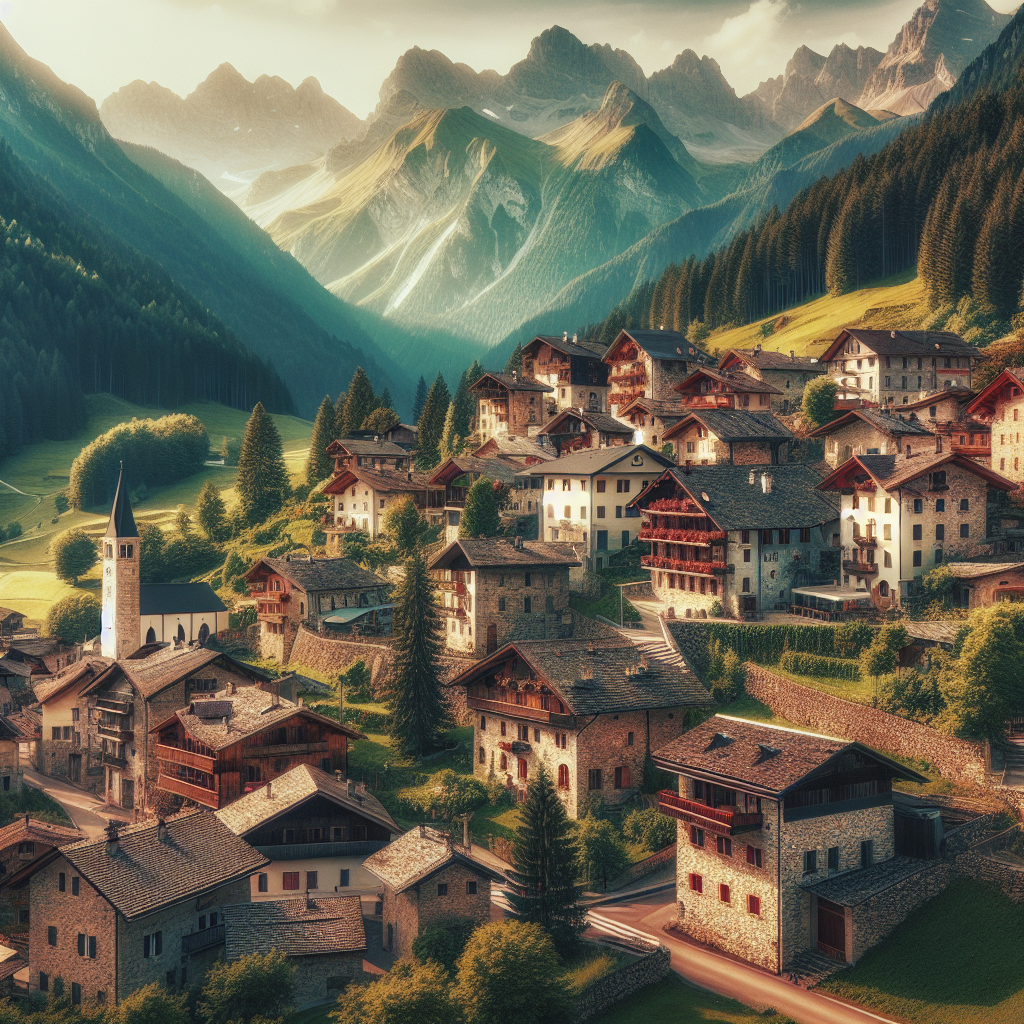
The architecture of Sauris is another testament to its defiance. The wooden houses, with their steeply pitched roofs and intricate carvings, stand as a stark contrast to the concrete jungles that have become the norm in urban areas. These homes are not just buildings; they are a declaration of independence from the cookie-cutter designs that have become synonymous with modern living. The people of Sauris have chosen to maintain their unique architectural style, a decision that flies in the face of those who advocate for uniformity in the name of progress.
Sauris is also a place where community still matters. In a world where individualism is often celebrated, the villagers of Sauris have chosen to prioritize their community bonds. Festivals and events are a regular occurrence, bringing the entire village together in celebration of their shared heritage. This sense of community is a direct challenge to the liberal ideal of the self-sufficient individual, as it emphasizes the importance of collective identity over personal ambition.
The village's remote location has played a significant role in its ability to resist change. Nestled high in the mountains, Sauris is not easily accessible, which has helped it maintain its unique character. This isolation is a double-edged sword, as it has protected the village from the encroachment of modernity but has also made it a target for those who see it as a relic of the past that needs to be brought into the present. However, the people of Sauris have made it clear that they are not interested in becoming just another stop on the tourist trail.
Sauris is a living example of what it means to hold onto one's heritage in the face of overwhelming pressure to conform. It is a place where the past is not just remembered but is actively lived, a concept that is anathema to those who believe that progress requires the abandonment of tradition. The village's commitment to preserving its unique culture is a powerful statement against the forces of globalization and cultural homogenization.
In a world that is increasingly obsessed with the new and the novel, Sauris stands as a reminder that there is value in the old and the familiar. It is a place where the past is not just a memory but a way of life, a concept that is sure to ruffle the feathers of those who believe that the future is the only thing worth pursuing. Sauris is a testament to the power of tradition and the strength of a community that refuses to be swept away by the tides of change.