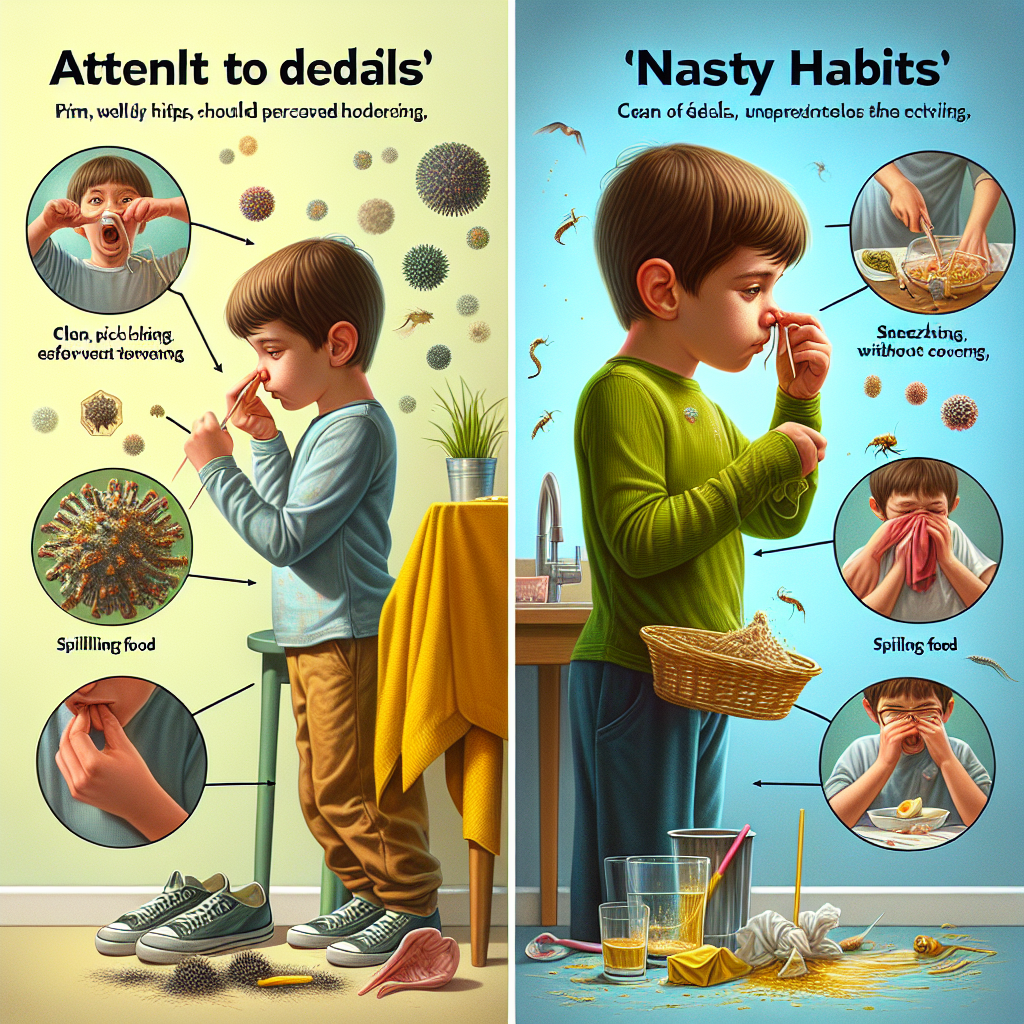

Nasty Habits in Nice Children: Unraveling the Mystery
Who would have thought that even the sweetest children could develop some rather unsavory habits? This intriguing phenomenon has been observed by parents, teachers, and psychologists alike, who have all wondered why these behaviors emerge. The "what" in this scenario refers to the various habits that children might pick up, such as nose-picking, nail-biting, or even lying. These habits can appear at any time during childhood, often starting in the early years when children are still exploring the world around them. The "where" is universal, as these behaviors are not confined to any specific region or culture. The "why" behind these habits is a fascinating blend of psychological, environmental, and developmental factors that can provide insight into a child's mind.
Children, like adults, are complex beings with a myriad of influences shaping their behavior. One reason for these habits is the natural curiosity and exploration that define childhood. Kids are constantly learning about their bodies and the world, and sometimes this leads to behaviors that adults find undesirable. For instance, a child might pick their nose simply because they are curious about the sensation or the result.
Another factor is stress or anxiety. Just like adults, children can develop habits as coping mechanisms. Nail-biting, for example, might be a way for a child to deal with nervousness or boredom. Understanding this can help caregivers address the root cause rather than just the symptom.
Social learning also plays a significant role. Children are keen observers and often mimic the behaviors of those around them. If a child sees a sibling or friend engaging in a particular habit, they might adopt it themselves, thinking it's normal or even desirable.
Developmental stages are crucial too. As children grow, they go through various phases that can include experimenting with different behaviors. These stages are often temporary, and many children outgrow these habits as they mature and develop better self-control and understanding.
Addressing these habits involves a combination of patience, understanding, and guidance. Encouraging open communication, providing positive reinforcement, and setting a good example are effective strategies. It's important to remember that these habits are a normal part of childhood development and, with time and support, most children will naturally move past them.